Formentera is the smallest of the four major Balearic Islands, a flat 19 km strip of pale sand, juniper scrub and UNESCO-protected Posidonia seagrass reachable only by ferry from Ibiza, where 12,000 year-round residents and one of the calmest Mediterranean shoulder seasons turn the whole island into a long dog walk. Top spots for pets include the Far de la Mola lighthouse on the eastern 142 m cliff, the Camí Romà historic path up to the La Mola plateau, and the Trocadors peninsula causeway above Ses Illetes, especially around Sant Francesc Xavier (the capital with the 1726 fortified church), Es Pujols (the main coastal resort), and Sant Ferran de ses Roques (the bohemian inland village).
All pet-friendly hotels in Formentera, live from Booking.com, click any marker to see prices and book.
Why Formentera with your pet?
Formentera is the smallest of the four major Balearic Islands, a flat 19 km strip of pale sand, juniper scrub and UNESCO-protected Posidonia seagrass reachable only by ferry from Ibiza, where 12,000 year-round residents and one of the calmest Mediterranean shoulder seasons turn the whole island into a long dog walk.
📍 Top spot
the Far de la Mola lighthouse on the eastern 142 m cliff, the Camí Romà historic path up to the La Mola plateau, and the Trocadors peninsula causeway above Ses Illetes.
🏘️ Best area
Sant Francesc Xavier (the capital with the 1726 fortified church), Es Pujols (the main coastal resort), and Sant Ferran de ses Roques (the bohemian inland village).
No hotels listed yet for this combination. Check back soon or browse Booking.com directly.
Search live prices across airlines that allow pets in cabin (Air France, KLM, Lufthansa, SAS and more). Pet policy must always be confirmed with the carrier before booking.
Formentera is the smallest of the four major Balearic Islands, a flat 19 km strip of pale sand, juniper scrub and stone-walled fields lying 6 km south of Ibiza, reachable only by ferry from Ibiza Town to La Savina port (30 to 45 minutes). It has no airport, no high-rises and only 12,000 permanent residents - numbers that swell to nearly 70,000 in peak August before falling back to true island calm by November. The waters around the island are part of the UNESCO World Heritage Site of Eivissa and Formentera, recognised in 1999 for the exceptional Posidonia oceanica seagrass meadows that filter the famously turquoise sea. Inhabited since prehistory, repopulated in 1697 after centuries of Barbary raids, the island today combines a working agricultural interior with the world-famous beach of Ses Illetes, repeatedly voted the best in Europe. For the canine traveller, the sweet spot is April-May or October-November: gentle 18-23°C, beaches still or once again open to leashed dogs, prices roughly half of August, and a quiet ferry that lands you on a flat island made for slow walks.
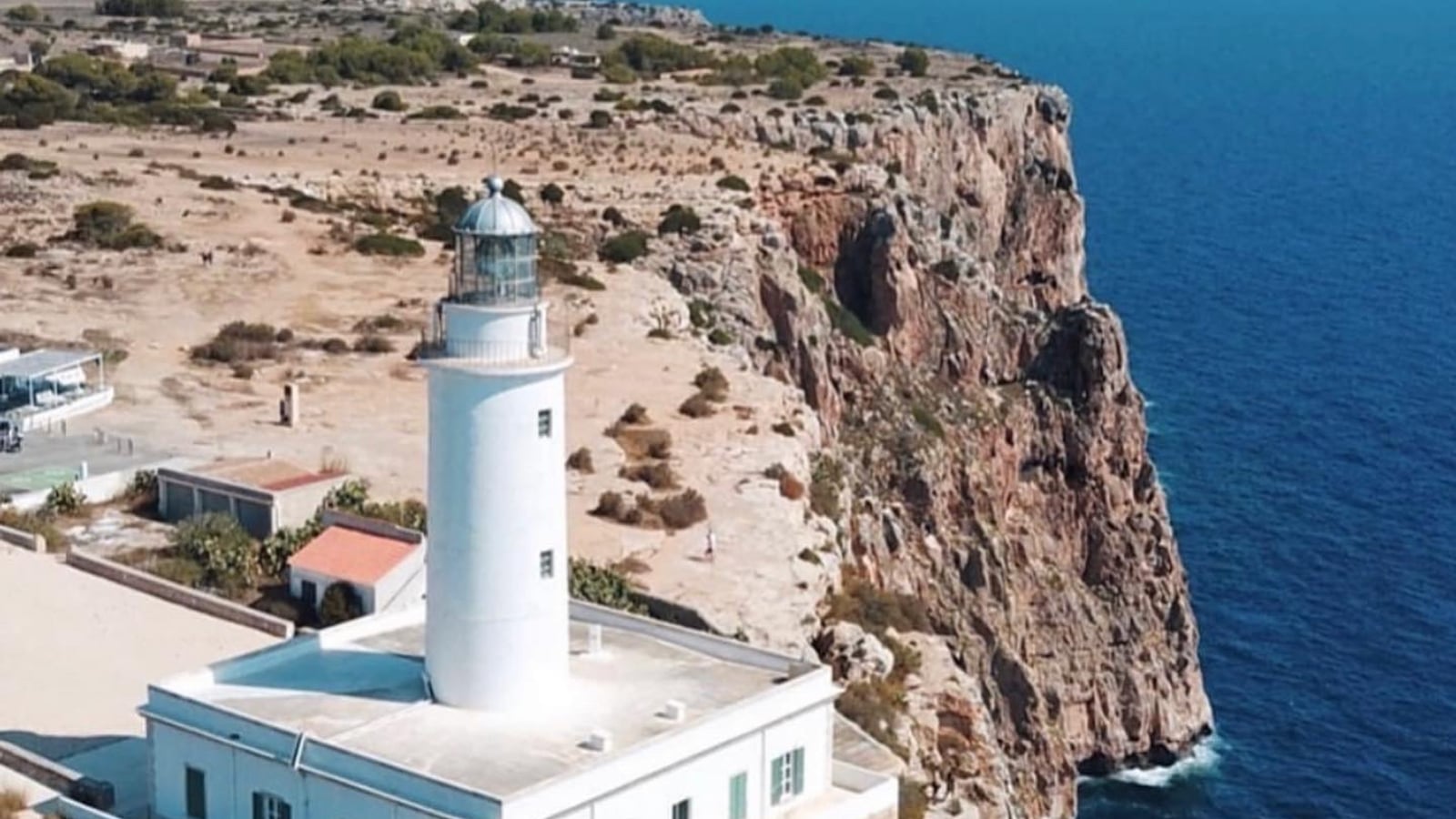
1861 lighthouse on the 142 m vertical cliff at the eastern tip of Formentera, the easternmost point of the Balearics. Famous from Jules Verne's Hector Servadac novel. Leashed dogs welcome on the entire exterior platform and the surrounding clifftop paths; lighthouse interior is closed to visitors.
1972 lighthouse at the southern tip of Formentera, reached by 7 km of unpaved dirt track through juniper scrub and Bronze Age dwelling ruins. The most cinematic sunset spot on the island, with no built environment in any direction. Leashed dogs welcome the whole way and on the cliff platforms around the lighthouse.
The slim northern peninsula of Formentera, with white sand and turquoise water on both sides, regularly voted Europe's best beach. Dogs banned 1 June-30 September; outside that window the salt-flat causeway and the dirt service road across the peninsula tolerate leashed dogs and offer the iconic photo without the beach itself.
The white-washed capital village, anchored by the 1726 fortified parish church that doubled as a refuge from Barbary corsairs. The main square hosts the Wed/Sat craft markets and is ringed by café terraces welcoming leashed dogs; the church interior is closed to dogs but the exterior steps and walled garden are dog-friendly.
Historic 5 km dirt and stone path climbing from Es Caló de Sant Agustí up the cliff face to the La Mola plateau, used since Roman times. Pine groves, stone-walled fields and sweeping north coast views. Leashed dogs welcome year-round; gentle gradient suits older dogs.
The bohemian inland village famous for its hippy-era heritage, where Bob Dylan and Joni Mitchell drank at Fonda Pepe in the 1960s. The shaded village square in front of the 1883 church is the social hub, with dog-friendly terraces year-round and weekly live folk music in summer.
Restaurants, parks, transport, beaches, vets. Everything you need to know for Formentera with your pet.
Terrace cafés & dog-welcoming spots
Off-leash zones, trails & green spaces
Metros, trains & pet travel rules
Dog-friendly beaches & coastal walks
Sights, museums & things to do
Trusted sitters & day care services
Emergency vets & animal clinics
Local rules, habits & insider tips
Average temperatures. Ideal for planning your pet trip
🐾 Best months to travel with a pet in Formentera: Apr, May, Jun, Jul, Sep, Oct, Nov